Discovering Exactly How Business Philanthropy Shapes Brand Name Track Record and Client Loyalty
Business philanthropy significantly affects brand name reputation and customer loyalty. Business that involve in genuine philanthropic campaigns usually see a positive shift in how consumers perceive them. This placement of values cultivates trust fund and emotional links with audiences. However, the performance of these kind initiatives can differ substantially. Recognizing what absolutely resonates with consumers is necessary for brand names looking for to improve their social influence and market setting. What techniques will become essential for future success?
The Development of Company Philanthropy
As businesses increasingly acknowledge their duty in culture, the development of company philanthropy has changed from plain charitable contributions to a critical element of brand identity. At first, companies took part in philanthropy mainly for tax obligation advantages or to boost their public photo. Over time, this technique changed as stakeholders-- including clients, staff members, and financiers-- required a much more genuine dedication to social obligation.
Organizations began aligning their philanthropic efforts with their core worths and business purposes, leading to even more impactful and thoughtful contributions. This change has actually urged business to buy lasting practices and community growth, cultivating a sense of objective that reverberates with customers.
Technological improvements have helped with transparency and engagement, permitting companies to display their philanthropic efforts more effectively. Business philanthropy has actually arised as an essential component of business method, with organizations accepting the possibility to favorably affect culture while boosting their total brand name story.
The Impact of Philanthropy on Brand Name Understanding
While firms take part in philanthropic efforts to advertise social great, these efforts substantially shape brand name perception amongst consumers. Corporate philanthropy can enhance a brand's image by connecting it with positive social effect and area participation. Customers typically regard brands that proactively take part in charitable activities as even more trustworthy and liable. This perception can affect buying choices, as customers might favor brands that demonstrate a commitment to social problems.

Building Emotional Links Via Granting
Corporate philanthropy acts as an effective device for enhancing brand identity by connecting corporate values with area demands. Through calculated offering, business can promote community engagement and create common values that reverberate with customers on an emotional level. This method not just reinforces brand online reputation but additionally constructs long-term connections between services and their stakeholders.
Enhancing Brand Identification
They not only add to societal good yet also create deeper emotional connections with their audiences when firms involve in philanthropic initiatives. By aligning their brand with charitable reasons, companies boost their identification and signal values that resonate with consumers. This placement creates a narrative that goes past product or services, inviting consumers to join a shared mission. As customers significantly focus on purpose-driven brands, firms that proactively participate in providing can differentiate themselves in a jampacked market. Such efforts cultivate a feeling of commitment amongst customers that feel personally linked to the brand name's worths. Eventually, company philanthropy becomes an essential device for improving brand name identity, cultivating enduring connections based on shared ideas and psychological involvement.
Fostering Neighborhood Interaction
Numerous researches indicate that firms engaging in community-focused philanthropic efforts can significantly enhance psychological links with their stakeholders. By purchasing regional tasks and supporting social reasons, businesses cultivate a sense of belonging and count on within the neighborhood. This involvement cultivates a favorable brand name picture, as clients value firms that show genuine issue for social issues. Staff members typically feel much more proud and inspired to be associated with an organization that focuses on community well-being. Consequently, customers are most likely to develop loyalty in the direction of brands that proactively add to meaningful causes. Ultimately, fostering neighborhood involvement with philanthropy not just boosts brand reputation but additionally constructs enduring psychological connections that benefit both the company and the neighborhood it serves.
Producing Shared Values
How can organizations effectively develop common values that reverberate with their stakeholders? Companies can attain this by straightening their humanitarian efforts with their core mission and the passions of their communities. By participating in initiatives that resolve local requirements, businesses promote psychological links with customers, enhancing brand loyalty. As an example, partnering with non-profits that reflect shared worths reinforces the brand's image and demonstrates dedication to social obligation. Furthermore, transparent interaction regarding these initiatives enables stakeholders to see the concrete influence of their contributions. Inevitably, by integrating shared worths into their corporate philanthropy, companies not only improve their credibilities but additionally cultivate long lasting connections with consumers, leading to increased commitment and trust. This alignment is important in contemporary customer decision-making.
Case Researches: Successful Philanthropic Campaigns
Analyzing effective philanthropic projects discloses different strategies that enhance brand name online reputation. Impactful neighborhood initiatives, innovative partnership designs, and lasting involvement strategies have actually confirmed reliable in cultivating favorable connections with consumers. These study highlight the value of thoughtful corporate providing in attaining both social and business purposes.
Impactful Neighborhood Initiatives
Many companies have effectively leveraged philanthropic campaigns click for source to enhance their brand track record while making a significant influence in their communities. A technology firm launched an electronic literacy program in underserved neighborhoods, supplying training and resources that equipped regional citizens. This initiative not only contributed to neighborhood advancement however additionally placed the firm as a socially liable leader. A major food firm carried out an appetite alleviation project, partnering with local nonprofits to disperse dishes to households in requirement. This initiative reinforced neighborhood connections and promoted customer commitment. With these impactful initiatives, companies have actually demonstrated their dedication to social obligation, efficiently straightening their brand values with the needs of the communities they serve, eventually enhancing their total online reputation.
Innovative Collaboration Models
The success of impactful area efforts usually pivots on ingenious partnership models that unite varied stakeholders to deal with complex social obstacles. Instance research studies highlight exactly how companies, non-profits, and government entities can team up properly. For circumstances, an international company partnered with a regional charitable to release an education and learning program, merging sources and competence to improve neighborhood literacy rates. Another example included a tech firm and a health care organization signing up with pressures to establish a telemedicine option for underserved populations. These collaborations not just magnified the reach of humanitarian initiatives however also strengthened the brand names' reputations by straightening their goals with area needs. Inevitably, cutting-edge partnership models function as a driver for purposeful change and foster stronger connections between brands and their customers.
Long-term Engagement Approaches
Measuring the ROI of Business Social Responsibility
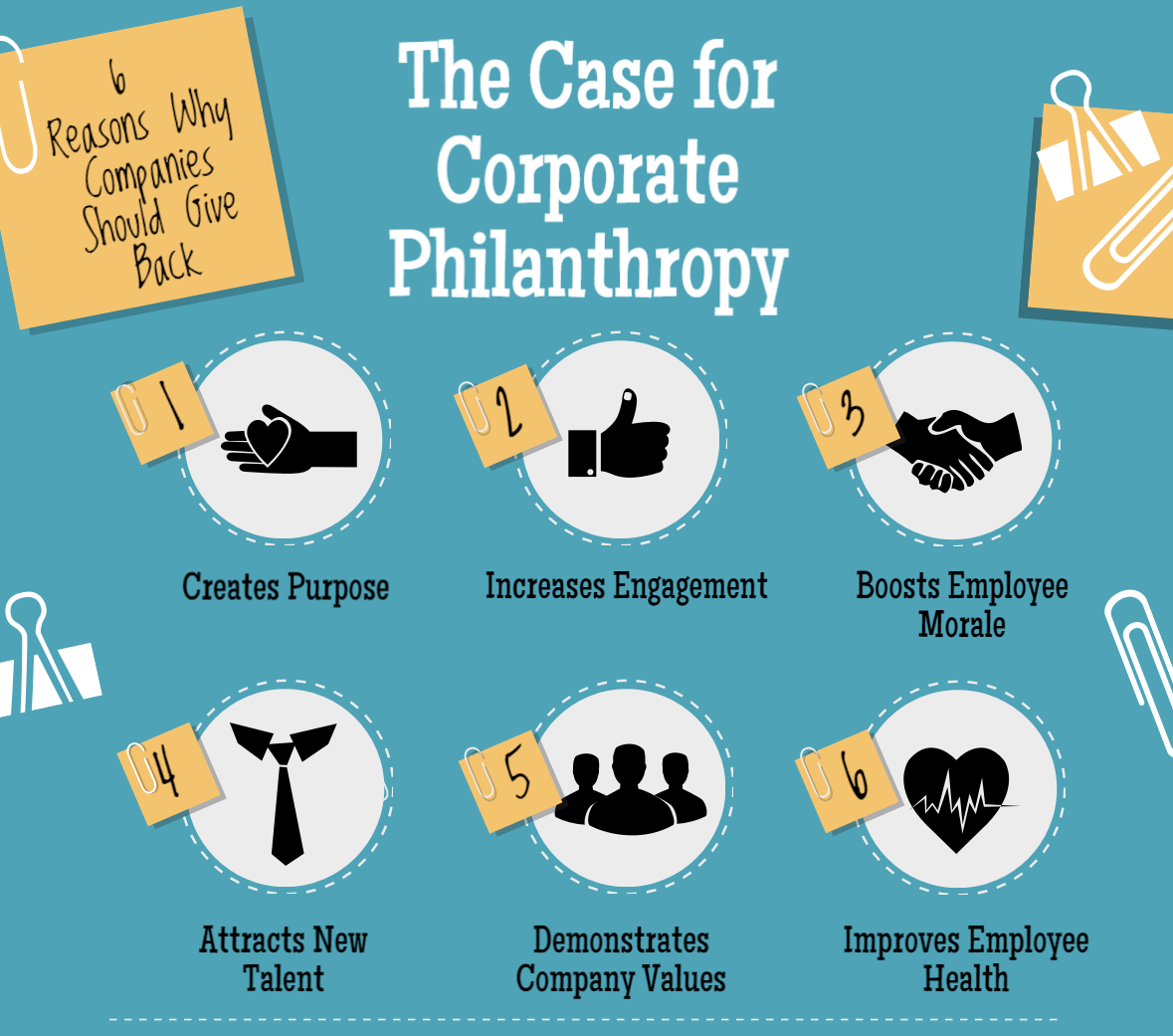
As business increasingly invest in business social obligation (CSR) initiatives, comprehending the roi (ROI) related to these efforts ends up being essential. Measuring ROI in CSR is diverse, typically incorporating both measurable and qualitative metrics. Economic returns can be assessed via increased sales, improved brand commitment, and improved staff member spirits, which can bring about greater efficiency. In addition, companies might evaluate expense financial savings connected to lasting practices, such as lowered waste or power consumption.
Qualitatively, the influence of CSR on brand track record can be assessed with consumer assumption researches and social media belief analysis. Studies can offer insights into exactly how CSR tasks affect customer commitment and trust. Benchmarking against sector criteria can aid organizations evaluate their CSR performance - corporate philanthropy. Eventually, an extensive technique to measuring ROI allows firms to make educated choices regarding future CSR investments, straightening approaches with both economic performance and social influence
Consumer Assumptions and Company Obligation
Increasingly, consumers expect firms to operate with a solid sense of company duty, seeing moral methods as a requirement for brand commitment. This shift in expectation reflects an expanding understanding of ecological and social problems, leading consumers to favor brand names that straighten with their worths. Customers are a lot more inclined to support firms that engage in clear techniques, show sustainability, and contribute favorably to their communities.
Social media intensifies these expectations, permitting consumers to share their viewpoints and experiences quickly. Brand names that fall short to satisfy these ethical standards take the chance of backlash, while those that accept corporate responsibility often take pleasure in superior reputation and client commitment. As customers require accountability, companies need to integrate company social duty into their core methods, focusing on honest habits not simply as a marketing method, yet as a fundamental element of their operations. This alignment can inevitably bring about stronger brand fondness and continual success in open markets.
Future Patterns in Business Philanthropy and Brand Name Commitment
The landscape of corporate philanthropy is evolving, influenced by the elevated consumer expectations surrounding business obligation. Firms are increasingly integrating social effect right into their core organization methods, not merely as an ancillary task. Future fads show a change towards openness, with brand names sharing detailed details about their philanthropic initiatives and their straight impacts on communities.
In addition, technology is playing a vital duty, allowing real-time engagement between brands and consumers. Social network platforms assist in direct interaction, enabling consumers to voice their assumptions and hold brand names responsible. In addition, younger generations, particularly Millennials and Gen Z, prioritize sustainability and honest techniques, driving companies to embrace more conscientious methods.
As corporate philanthropy becomes synonymous with brand name identity, firms that authentically straighten their goals with societal needs are most likely to cultivate more powerful client commitment. This convergence of values will ultimately shape the future of company credibility and consumer relationships in an increasingly diligent industry.
Regularly Asked Concerns
Just How Do Customers Discover a Firm's Philanthropic Efforts?
Customers uncover a company's kind efforts with different channels, consisting of social media sites, press releases, community occasions, and word-of-mouth. These methods facilitate understanding, making it possible for individuals to engage with brand names that align with their interests and worths.
What Function Does Staff Member Involvement Play in Business Philanthropy?
Staff member participation in company philanthropy improves web interaction, fosters a feeling of ownership, and strengthens team cohesion - corporate philanthropy. This involvement typically enhances the impact of philanthropic initiatives, resulting in greater understanding and support for the business's philanthropic initiatives
Can Corporate Philanthropy Backfire on a Brand's Credibility?
Corporate philanthropy can indeed backfire on a brand name's online reputation if regarded as opportunistic or insincere. Adverse public assumption might develop, causing diminished count on and commitment amongst consumers who focus on authenticity in corporate activities.
Are Smaller Firms as Reliable in Philanthropy as Larger Firms?
Smaller business can be just as reliable in philanthropy as bigger firms, often showing agility and credibility. Their local efforts might reverberate extra deeply with neighborhoods, promoting genuine connections regardless of restricted sources contrasted to their bigger equivalents.
Just How Can Business Choose the Right Creates to Support?
Firms can select the appropriate bring on by aligning their worths with area requirements, analyzing stakeholder passions, and examining possible impact. This strategic approach fosters credibility, improves interaction, and reinforces connections with customers and the more comprehensive area.
While companies engage in philanthropic initiatives to advertise social excellent, these campaigns considerably form brand assumption amongst consumers. As consumers increasingly prioritize purpose-driven brands, business that actively engage in giving can distinguish themselves in a crowded market. Many business have successfully leveraged philanthropic campaigns to improve their brand online reputation while making a purposeful influence in their neighborhoods. Significantly, consumers anticipate business to operate with a solid sense of business obligation, checking out moral practices as a requirement for brand name commitment. As company philanthropy ends up being associated with brand identification, business that authentically straighten their objectives with social needs are likely to cultivate stronger customer commitment.